Customs
Maiko and geiko: who is who
How a Kyoto maiko becomes a geiko, and how to tell them apart by collar, sleeve, sash and hair before your tea ceremony begins.
Choose a date for the tea ceremony ↗Quick answer
A maiko is an apprentice geisha; a geiko is the Kyoto word for a fully trained geisha. A maiko wears long trailing sleeves, a very long darari obi, a red collar and an elaborate hairstyle of her own hair with seasonal ornaments. A geiko wears shorter sleeves, a white collar and often a wig. The step between them is erikae, the collar-turning ceremony.
The words
Geisha are performers trained in Japanese dance, music and singing, and skilled hosts and conversationalists. In Kyoto they call themselves geiko, which translates roughly as a woman of art, while the apprentices are maiko. Their job is to sing, dance and play the shamisen or other instruments for guests at banquets, known as ozashiki. In the mornings maiko take lessons in the traditional arts; at night they work.
From trainee to geiko
The path has named stages. A shikomi lives in the okiya as a trainee, learning to wear kimono and talk to guests, often for up to a year. A minarai learns by watching at parties for about a month. At misedashi she debuts as a maiko and makes formal calls around her district. Maiko usually debut at seventeen or eighteen, and around twenty or twenty-one she graduates to geiko in the erikae ceremony.
Collar, sleeve and sash
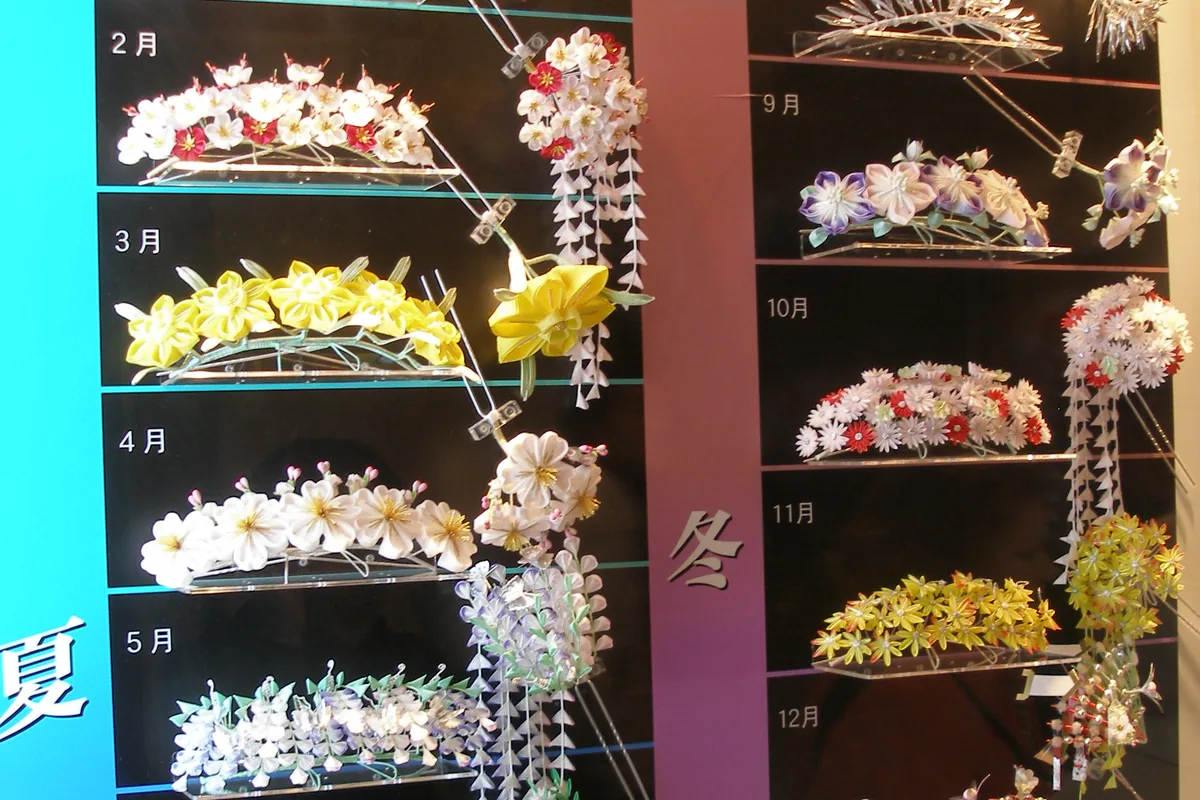
The clearest signs are on the kimono. A maiko wears a hikizuri, a trailing kimono, with long furisode-style sleeves, and shows the red collar of her under-kimono at the neck. Her obi, the darari, is six to seven metres long and hangs down her back, with her okiya's crest woven or dyed into one end. A geiko always wears short sleeves, a solid white collar and an obi tied in a drum knot.
Hair and ornaments
A maiko's hairstyle is made from her own hair and redone weekly, so she rests her neck on a raised takamakura pillow at night to protect it. Five hairstyles mark the stages of an apprenticeship; a junior maiko wears the wareshinobu. Her hana kanzashi, ornaments of folded silk flowers, change with each month of the year and their size and number shift with seniority. A geiko often wears a wig in a shimada style, with far fewer ornaments.
The house behind her
Every maiko is affiliated with an okiya, a geisha house run by a woman its members call mother. The okiya books her engagements and her lessons in singing, dance, instruments and tea, and often lends her the costly kimono she wears. Engagements themselves take place in ochaya, houses in the geisha districts where patrons are entertained, normally by introduction only.
Read next: Kyoto's geisha districts
Questions worth asking
The Q&A on the tea ceremony is your chance to go past the costume. Ask how long she spent as a trainee, which arts she studies now, how her hair is done and how she sleeps on the takamakura, what this month's kanzashi represent, or what a usual day looks like. Questions about her training and her arts tend to draw the fullest answers. Keep them short, since each one will be translated.
Who you will meet at the tea
On the tea ceremony near Gojō the provider brings in a maiko or a geiko, chosen day by day, and cannot say in advance which. With the signs above you will know at a glance: trailing sleeves, a red collar and a long dangling obi mean a maiko; short sleeves and a white collar mean a geiko. The programme does not change either way, and the questions above work for both.
Sources